
How to Find a Sauk County Property Owner
The fastest path runs address to parcel to deed. Ascent takes a site address and returns the parcel plus an Owner(s) field. Carry that parcel number into the county GIS. Then check the newest recording in LandShark. Think of the tax roll as a pointer and the deed as the proof. For a recent transfer, the deed is the stronger record. Is the owner an entity? Search its exact legal name in the Wisconsin business registry. Then come back to the deed for the actual land interest.
- Search the address in Ascent and note the municipality and parcel ID.
- Read the Owner(s) and mailing-address fields on the tax parcel.
- Check the latest deed in LandShark using the party name and land description.
- Use GIS to confirm that the parcel shape and site address match.
This sequence guards against a common mismatch. One owner name can sit on several parcels. A street name may describe land inside a city. It may also describe land in a neighboring town. Preserve the complete parcel number, including its municipality prefix and any leading zeros. Rural addresses deserve extra care. Use the legal description or PLSS fields rather than guessing from a postal town. Before attributing an owner to a property, demand agreement on more than one independent clue.
Sauk County's Owner Field
Ascent's results expose Parcel, Owner(s), Site Address, Privacy Expiration Date, and Tax Years. The parcel-year detail route works from the parcel, district, and year. Opening it directly may trigger a login or disclaimer. So a public search screen does not promise that every detail image appears without another step. The Ascent owner and address search is the county's starting point for the tax-roll name.
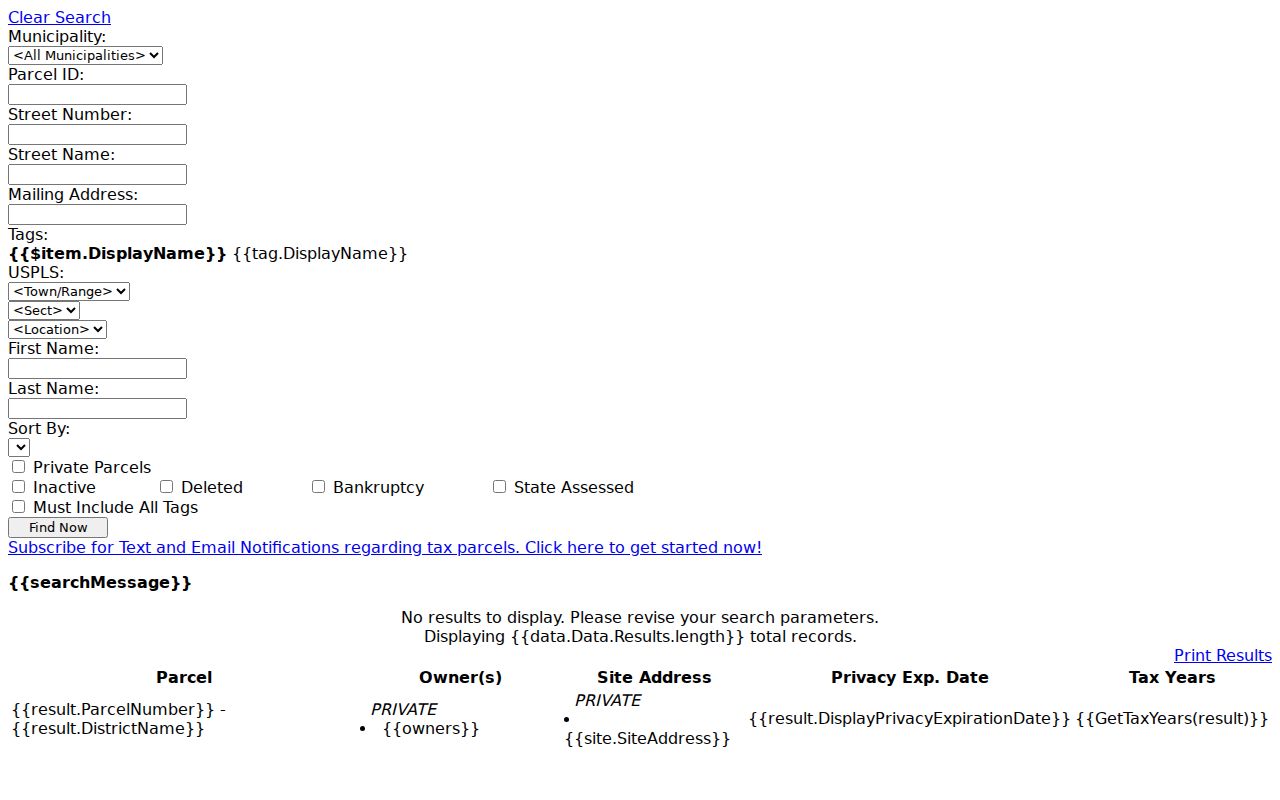
Write down the parcel and tax year. The same land can then be checked against the deed index.
The result grid is a tax-parcel index. It finds the parcel tied to an owner name. But it is not a live occupancy list. An ownership change recorded yesterday may not have reached the tax display yet. The Privacy Expiration Date is just a field in the search output. The county's own materials do not define it as a public disclosure date. Treat the label literally. Ask the custodian rather than drawing conclusions about a person from that field alone.
Sauk County Mailing and Site Addresses
The Site Address field locates the land. Mailing Address is where tax correspondence goes. It may point to a farm office, a trust, a lender, or an owner living elsewhere. A different mailing address is common. It does not prove the named person occupies the property. Keep both fields beside the parcel number, especially when a street address and legal description use different names.
Sauk County's approximate postal-code layer can explain a ZIP mismatch. Postal city and municipal boundary are separate things. Baraboo, Reedsburg, and Wisconsin Dells each carry their own parcel prefix. Wisconsin Dells crosses county lines. Confirm the custodian before treating a Dells address as a Sauk County parcel.
Sauk County LLC and Trust Owners
An LLC, corporation, trustee, or estate may appear as both grantee and tax-roll owner. Search the deed under the entity's exact recorded name. Wisconsin DFI Corporate Search can show a filed entity name, status, registered agent, and registered office. Those details resolve spelling and contact questions. They do not identify every person behind a trust or prove who controls the parcel. Wisconsin DFI's corporate search provides the entity record. Return to the Sauk County deed for evidence of the real-estate transfer.
For a corporation or LLC, compare the exact filed name, suffix, and status with the grantee. Check them against the recorded instrument. A registered agent or office is a statutory contact for the entity. It is not necessarily the property's owner, occupant, or decision-maker. Trusts raise a different question. The deed can identify a trustee capacity. But a public owner result may not name every beneficiary. Keep the land record and the entity record separate, because they serve different purposes.
Confirming Sauk County Ownership
For a new sale, compare the tax-roll name with the newest recorded instrument. Search LandShark by party and recording date. Then match the legal description and parcel reference. A deed can vest title in joint owners, a trust, or an entity. If the document names an estate representative, check the probate case or authority too. A same-name index result never identifies the right property by itself. The LandShark portal is the modern real-estate recording route. The county's parcel detail screen shows the year-specific record but may present an access notice, and the Ascent parcel-year detail route displays the selected tax-record entry.
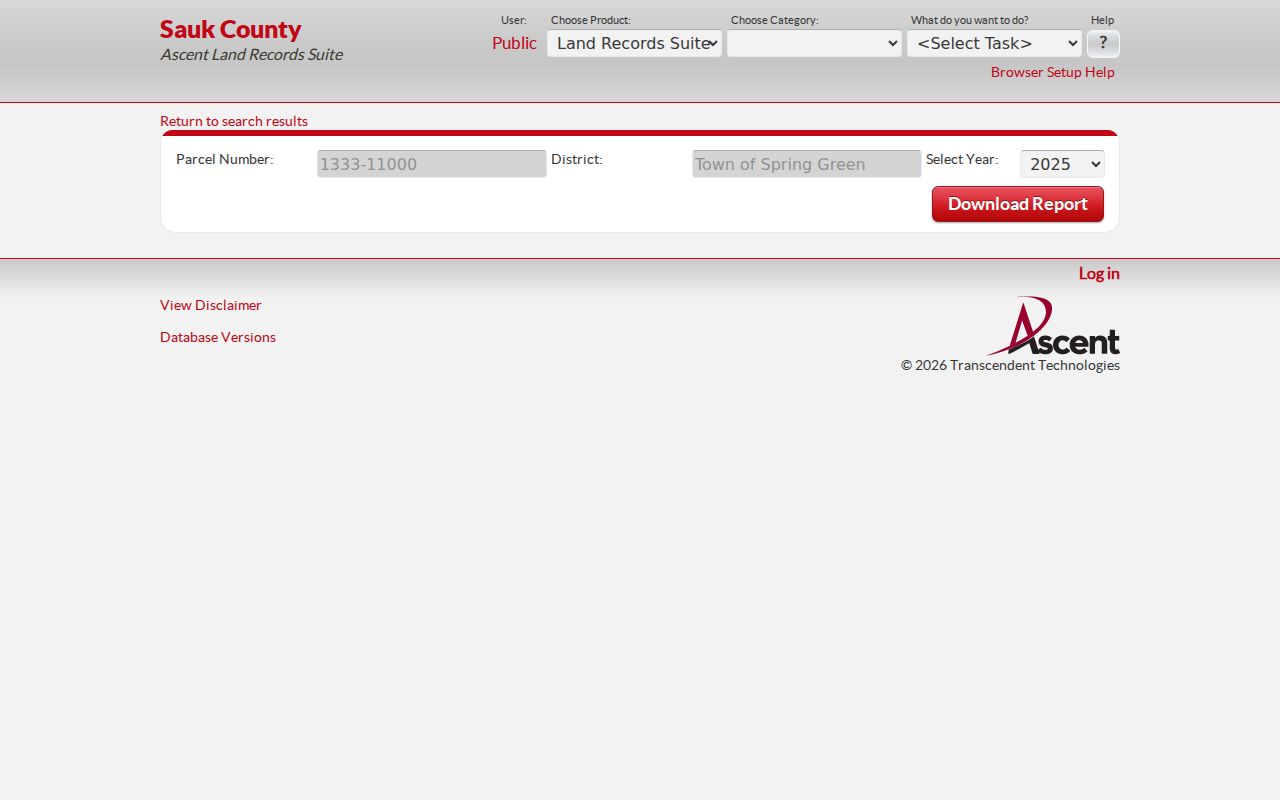
A tax card and a deed can disagree about the current owner. Check the dates first. The newer instrument usually wins. Ask the Register of Deeds or the Real Property Lister when the two conflict. They can tell you which property record governs.
The instrument's legal description is a useful second match. This matters when the deed covers several lots, a partial interest, or multiple grantees. A deed can convey land into joint ownership, an estate, or a trust. A later document may also change the recorded interest. Warranty deeds, quitclaim deeds, personal representative deeds, and transfer-on-death instruments each carry different vesting language. The document type and its vesting clause explain what the deed records say. Neither replaces a full title review.
Sources for a Sauk County Property Owner
No single result answers every ownership question in Sauk County. Compare the assessor or lister tax roll, the recorder's instrument, and the parcel geometry on the GIS map. Each source updates on its own path and carries a different legal role. A name on the tax roll is the owner of record for billing purposes, while the deed names the grantee in the recorded transfer.
| Source | Owner Info It Gives | Access |
|---|---|---|
| Ascent tax parcel | Owner(s), site address, parcel, and tax years. | County property-search portal. |
| LandShark or historical index | Recorded grantee, grantor, document type, and reference. | Modern index and older county index. |
| Wisconsin DFI | Entity name, status, registered agent, and office where filed. | State business search. |
| Sauk County GIS | Parcel shape, site address, acreage, and mapped districts. | County map and open GIS layers. |
Who owns this property means who is named in a land record. It does not mean who lives there. A tax-mail destination is not a physical-location clue. Sauk County's recorded parcel fields can also display privacy-related information. Eligible Safe at Home participants use an assigned address instead.
Each source also updates on its own cycle. The Register of Deeds indexes the recorded instrument. The tax parcel supports assessment and billing. GIS links parcel attributes to geometry. A mismatch may simply reflect different dates or a record still in process. The county publishes no standard transfer-to-roll lag, so note each record's date and tax year. Then ask the Register or Real Property Lister to explain any discrepancy.
Sauk County Owner Update Timing
Sauk County publishes no fixed average lag between a closing and an Ascent owner update. A sale may be recorded before the tax roll shows the new owner. When dates differ, compare the deed's recording date with the tax year. Ask the Register of Deeds or Real Property Lister which record is currently used. A mismatch alone is not proof that a transfer failed.
A blank result has other explanations. The parcel may sit in a neighboring town or another county. Try removing optional filters. Search by parcel number or an alternate name form. Ascent exposes filters for private, inactive, deleted, bankruptcy, and state-assessed parcels, though the search form does not define every status. Treat a blank search as a prompt to test other keys and ask the custodian, not as evidence that no public land record exists.
Finding the present owner differs from identifying an owner generally. The Sauk County current owner record route focuses on the owner field and how to confirm a recent deed without walking the full historic chain.
Limits of Sauk County Owner Records
A public owner lookup has limits. It does not show who occupies a home, guarantee a complete deed chain, or settle clear title. Wisconsin's Safe at Home program under Wis. Stat. § 165.68 gives eligible participants an assigned address that shields the actual address, subject to law and court orders. Ascent also carries a privacy-expiration field. Read that screen carefully rather than inferring a person's location from it.
Lawful use. Use Sauk County owner records for parcel research and property diligence. Do not use a name or mailing address to watch, stalk, harass, or harm anyone.