
What the Sauk County Owner Record Shows
The county tax portal, Ascent, shows its results in a grid. Fields include the parcel number, Owner(s), Site Address, Privacy Expiration Date, and Tax Years. Opening a detail record asks for parcel, district, and year. Keep two records straight here. The tax parcel carries the owner field. The deed names the recorded grantee. Match the municipality and legal description in both. A shared name on the wrong parcel proves nothing about who owns a property in Sauk County.
| Owner(s) | The name or names attached to the tax parcel. |
|---|---|
| Parcel | The municipality-coded key used to match the same land. |
| Site Address | The location associated with the parcel, not the tax-mail destination. |
| Tax Years | The years available in the result; open the selected year for detail. |
| Privacy Expiration | A field displayed in the result that may affect owner-name presentation. |
| Recorded deed | The grantee and legal description in the latest transfer instrument. |
An owner of record is simply the party named in the tax or deed record. It does not tell you who lives in the building. The mailing address is where tax notices go; the situs address is the land itself. A tax bill may reach a trust. It may reach a lender, a farm office, or an owner living in another county.
Treat the fields as one dated record. The Owner(s) line can list several parties. A parcel may also have been split or reorganized since an earlier deed was recorded. The tax display points to a specific parcel and its available tax years. The deed shows the parties and the interest conveyed as of its recording date. Note: save the municipality code and legal description alongside the name so a current-owner inquiry stays attached to the correct parcel.
Sauk County's Current Owner Field
The Ascent property search is the county's portal for this work. It accepts searches by address, owner name, parcel number, mailing address, and municipality. Results display Owner(s) next to Parcel, Site Address, Privacy Exemption Date, and Tax Years. The current owner entry might be one person. It could also be co-owners, an LLC, a trust, or an estate. If a detail link opens a disclaimer or login instead of the record, go back to the county Tax Data route. From there, follow the parcel-year path from the search result.
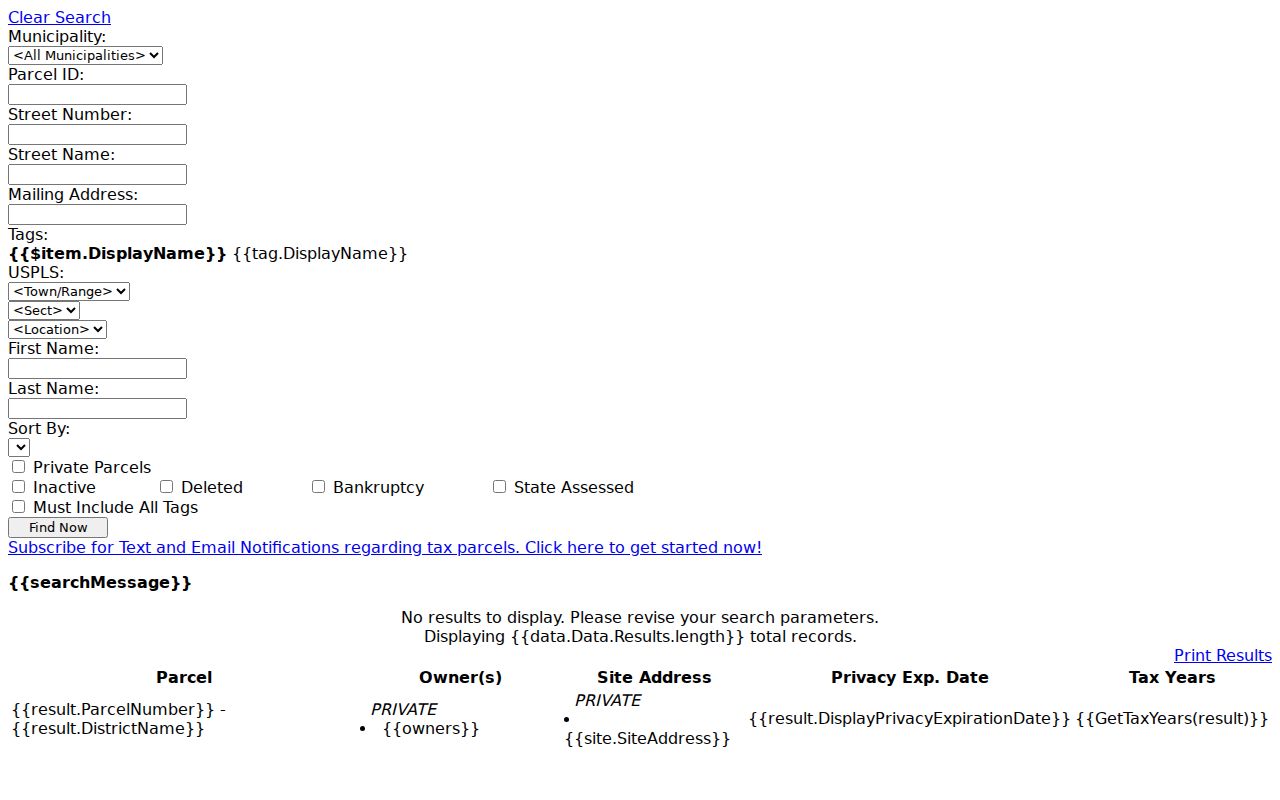
The result fields tie a name to a parcel number. The fields also tie it to the tax years on file. That matters. A name matched to an address alone, without the parcel, is unverified.
A detail route may ask for district and year. Take those values straight from the result. Do not guess. An available year is a tax-record period, not the year the owner bought the property. The county screen may also show a privacy-expiration field. A blank, masked, or changing owner entry says nothing about where a protected participant lives.
Sauk County Situs and Mailing Fields
The situs field points to the land. The mailing address points to where tax notices go. A mismatch between them is not an error by itself. An owner can receive a bill at a business, a trust, a lender, or a home address in another county. The Treasurer's address-change form updates only the mailing address used for assessment and tax correspondence. It changes nothing about title, parcel location, or ownership.
Keep those two addresses separate. A correspondence address is not evidence of where anyone lives. If the site address is unclear, compare the parcel's legal description, municipality, and map location.
That Treasurer update is administrative. It is not a deed and not an address change to the parcel. A lender, trustee, farm manager, company, or family member can receive mail without ever being a grantee. When situs and mail destination disagree, run a parcel and deed comparison. Skip conclusions about occupancy or control.
Sauk County's Latest Recorded Deed
For a transfer that just closed, the newest recorded deed is the stronger source. Sauk County records modern instruments through LandShark. Search the owner's name as grantee. Then read the instrument date, capacity, and legal description. A matching name alone proves nothing. It must match the parcel in the tax result.
LandShark's recording search is linked by the Register of Deeds. The Ascent parcel-year detail route is the separate tax-record entry. It covers a chosen parcel, district, and year.
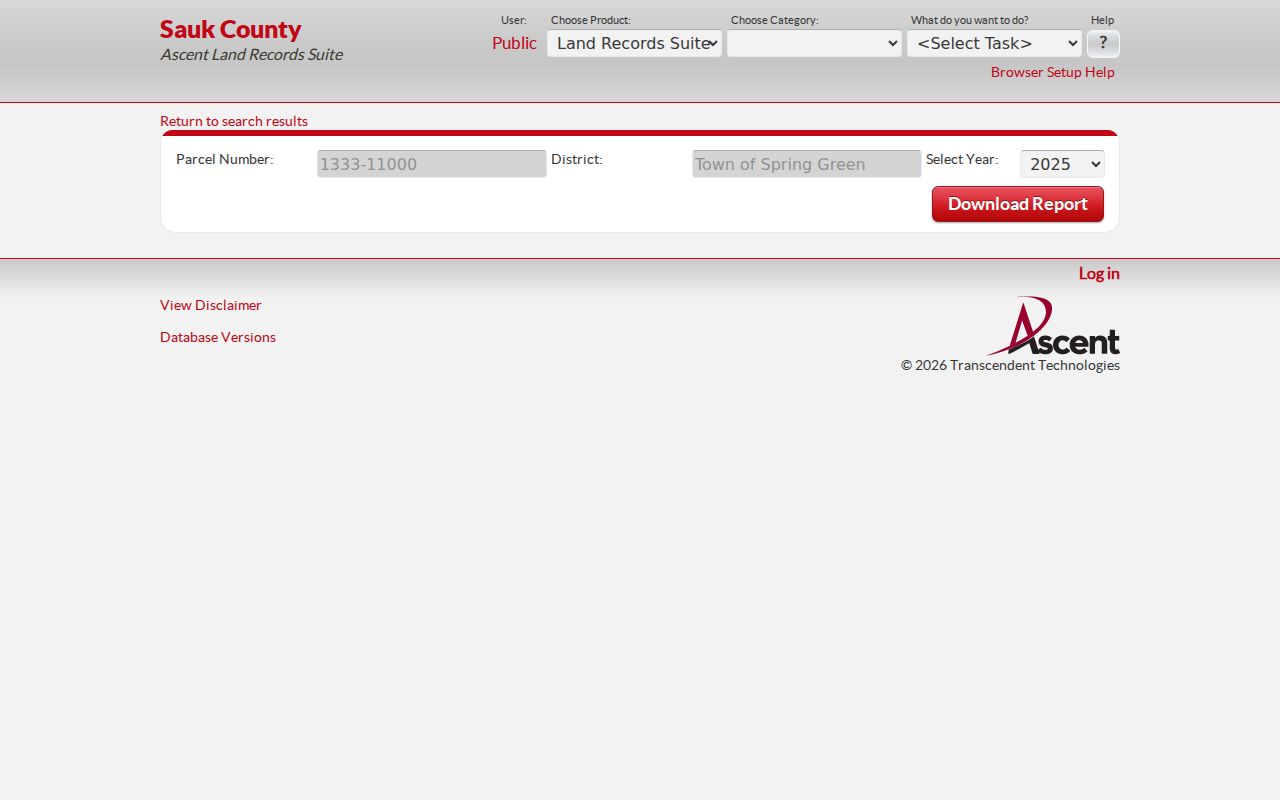
A parcel detail route can open with a login or disclaimer. Expect the year record and deed image to take separate steps.
Older parcels and recent subdivisions add wrinkles. The newest deed may describe multiple lots. It may cover a partial interest or land later split into new tax parcels. Compare the instrument's legal description against the current Parcel Info report and map. Sauk County notes that a new split can show $0.00 until its next assessment cycle. So a missing or provisional value does not make the transfer or the parcel invalid.
Confirming Today's Sauk County Owner
Confirming today's owner takes two steps. Use the tax roll to locate the parcel. Then check the newest deed for the owner's name, and compare the recording date and land description. If the records differ, the deed may simply have been recorded after the latest tax update. Sauk County publishes no fixed average lag between recording and the tax roll. So compare dates parcel by parcel.
- Open the Ascent parcel result and note Owner(s), parcel, and tax year.
- Search LandShark for the latest deed and confirm the grantee and legal description.
- Check whether the named owner is an individual, joint owner, entity, or estate.
- Keep the mailing address separate from the property situs.
- Owner of record
- The party named in the county's tax or recorded deed record.
- Vesting
- The capacity or form in which the deed conveys the interest.
- Grantee
- The party receiving the interest in the recorded deed.
- Registered agent
- A state-filed contact for an entity, not necessarily its owner.
Check two dates before you trust any owner listing. The tax year drives the assessment snapshot. The recording date shows when the deed reached the Register of Deeds. Those dates rarely line up. A deed may be recorded weeks after the assessor froze the parcel card. Sauk County also refreshes its parcel data on no fixed public schedule. When the two dates clash, call the Register of Deeds or the Real Property Lister. Ask which entry reflects the true owner of record. Keep both figures in view whenever you compare property records from different county sources.
Sauk County Owner Update Timing
Timing matters when you chase a current owner. A deed gets recorded the day the Register of Deeds accepts it. The tax roll updates later. So the owner of record on the parcel card can lag the deed records by weeks. No standard refresh interval applies across Sauk County sources. Place each deed in time with its recording date. When the deed records and tax roll disagree, ask the Register of Deeds or Real Property Lister which name is current.
The broader Sauk County owner lookup method starts with an address. It walks through which record to compare. This page sticks to the present owner of record rather than tracing past ones.
Sauk County Trust and LLC Names
Trusts and LLCs complicate an owner search. Copy the name exactly as the deed spells it, suffix and all. The Wisconsin DFI Corporate Search can confirm that a corporation or LLC is active, list its registered office, and name its agent. It cannot reveal who benefits from a trust. Nor does it prove any person actually controls the parcel. The recorded vesting language in the deed records stays the core evidence of the current owner.
Estate transfers raise similar limits. A probate file may explain a personal representative's authority. Death certificates fall under Wisconsin vital-record eligibility rules. An open deed does not open every vital record with it.
Using the Sauk County Mailing Address
A mailing address on the tax bill is just that. It tells the treasurer where to send the property tax notice. It does not prove the owner lives there. Nor does it guarantee a letter reaches that person. Wisconsin's Safe at Home program under Wis. Stat. § 165.68 substitutes an assigned address for eligible participants. This shields the real one as law and court orders allow. In Sauk County results, a privacy-expiration field may appear. It can shape what an Ascent search shows.
Lawful use. Use the Sauk County owner record for legitimate parcel questions and property diligence. Never use an owner name or mailing address to stalk, threaten, harass, or harm anyone.