
Tracing Sauk County Former Owners
Work backward from today's grantee to each earlier deed in the Sauk County deed records. The land description is the thread, not the name. Treat the table as a worksheet. Fill in each grantor, grantee, date, and instrument straight from the index result and the recorded deed itself. It documents a method, not a sample Sauk County transaction.
| Transfer Date | Grantor to Grantee | Deed Type | Book/Page or Instrument |
|---|---|---|---|
| Latest deed date | Current grantee to prior grantor | Copy the instrument label | Record the exact reference |
| Prior transfer date | Prior grantee to earlier grantor | Copy the instrument label | Record the exact reference |
| Earlier link date | Continue the same parcel backward | Compare deed capacity | Note book/page or instrument number |
LandShark covers the modern era. The county's historical index reaches back to the mid-1800s and stops in late 1986. Not every deed image is online. Sauk County dates to 1840, so the earliest work may call for deed books, microfilm, a counter search at the recorder's office, or archival help.
Sauk County's Historical Index Range
The Sauk County Register of Deeds describes its historical Grantor/Grantee Index as mid-1800s through late 1986. LandShark picks up after that. The year range describes the index itself. Online images are not guaranteed. Crossing the cutoff means switching systems, and a researcher may still need a physical book, microfilm, or a copy request.
| Source | Coverage | Where | What It Adds |
|---|---|---|---|
| LandShark | Post-1986 recording system | Register of Deeds portal | Modern party and instrument search; image rules need confirmation. |
| Historical index | Mid-1800s through late 1986 | County-linked grantor/grantee index | Party trail; full digital image coverage not verified. |
| Deed books or microfilm | Earlier chain continuation | Ask Register of Deeds or archive | Original instrument text and older references. |
| Historic plats and CSMs | Recorded map eras | Register, GIS, or history collections | Lot, block, subdivision, and survey context. |
The Register's property and deed page links the historical index and LandShark.
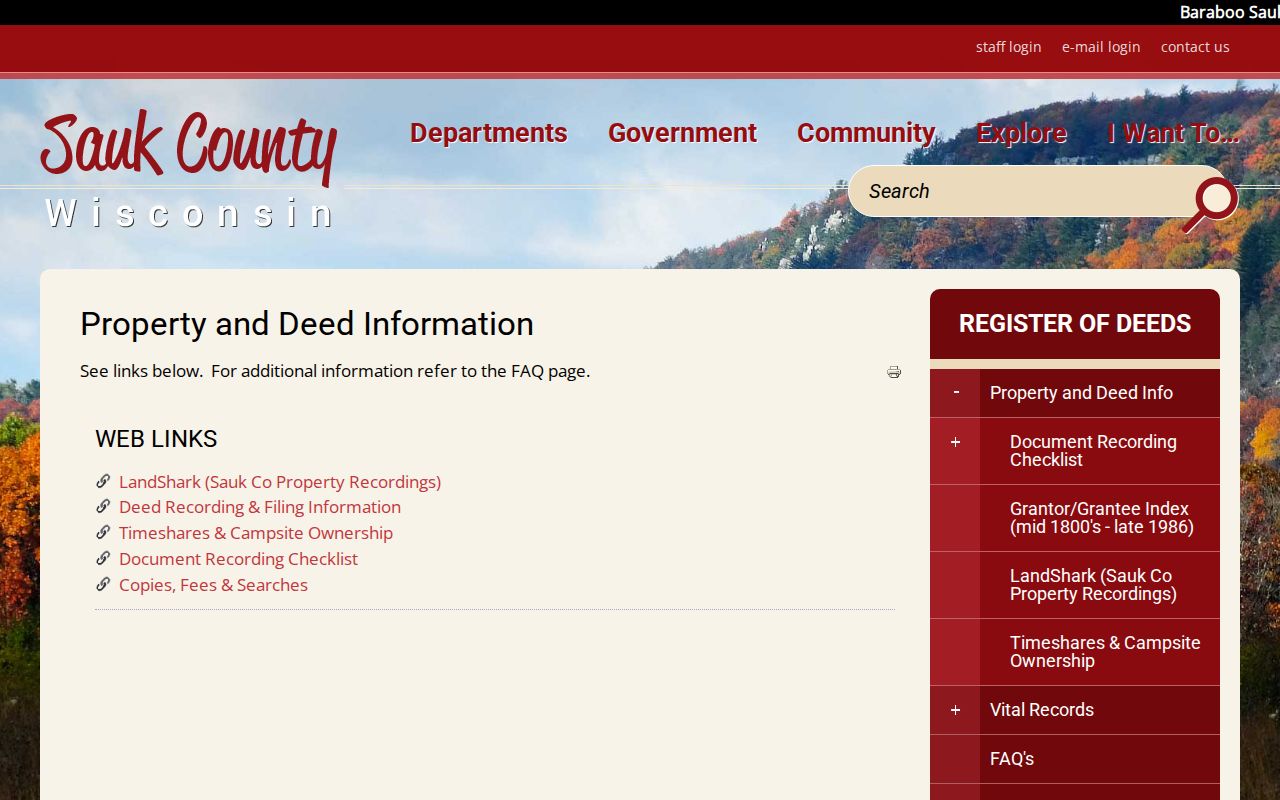
Switch indexes at the 1986 boundary. A historical index entry gives you a party name and a book or reference clue. That is only the lead. The underlying instrument is the next task. A name match alone proves nothing, since a similar entry may concern different land. Copy every book-and-page clue exactly. Ask the Register of Deeds which book, film, or copy route fits that reference, keeping any volume notation intact.
Sauk County Lot and Block Clues
An old deed rarely names today's street address. In platted areas, compare the subdivision, lot, and block instead. Rural land is described by section, township, range, government lot, or metes and bounds. The Sauk GIS map keeps historic lots and PLSS fractional lots alongside current tax parcels. That map bridges old deed to new parcel.
One example is a historic Baraboo plat held by the Wisconsin Historical Society. It labels lots, blocks, streets, the city limits, zoning, and the Baraboo River. A map like that explains an old land description. It is not a current boundary survey.
Rural descriptions outlast postal addresses. City lots are trickier. A renamed street or a renumbered house can break a direct address search even when the parcel stays the same. Use map labels for the next clue. Then compare the current GIS map and the deed description before continuing the chain.
Sauk County Entity Transfers
A chain changes names when a parcel moves into an LLC, trust, or estate. Copy the grantee spelling exactly. Search that entity as grantor next. Wisconsin DFI can clarify a corporation's or LLC's filed name and registered agent. DFI explains the entity, not the land transfer. The deed's legal description is what keeps the chain tied to the right parcel.
Walking Back Through Sauk County Deeds
Use the party roles in reverse. The current owner is the latest grantee. That deed's grantor is the prior owner. Search that prior grantor as grantee to find the purchase before it, and keep going. In Sauk County, match the land description every time, because names repeat and addresses change; the index only leads to the instrument, and the instrument confirms the transfer.
- Find the latest deed and write down its grantee and legal description.
- Read the grantor and any prior deed reference in the instrument.
- Search that grantor as grantee and compare date, parcel, and land description.
- Repeat until the index cutoff, then switch to the historical index or book.
- Grantor
- The person or entity conveying an interest.
- Grantee
- The person or entity receiving it.
- Chain of title
- The ordered sequence of recorded transfers for the same land.
- Legal description
- A written land identity that can persist when a street name changes.
Begin with the LandShark recording entry point.
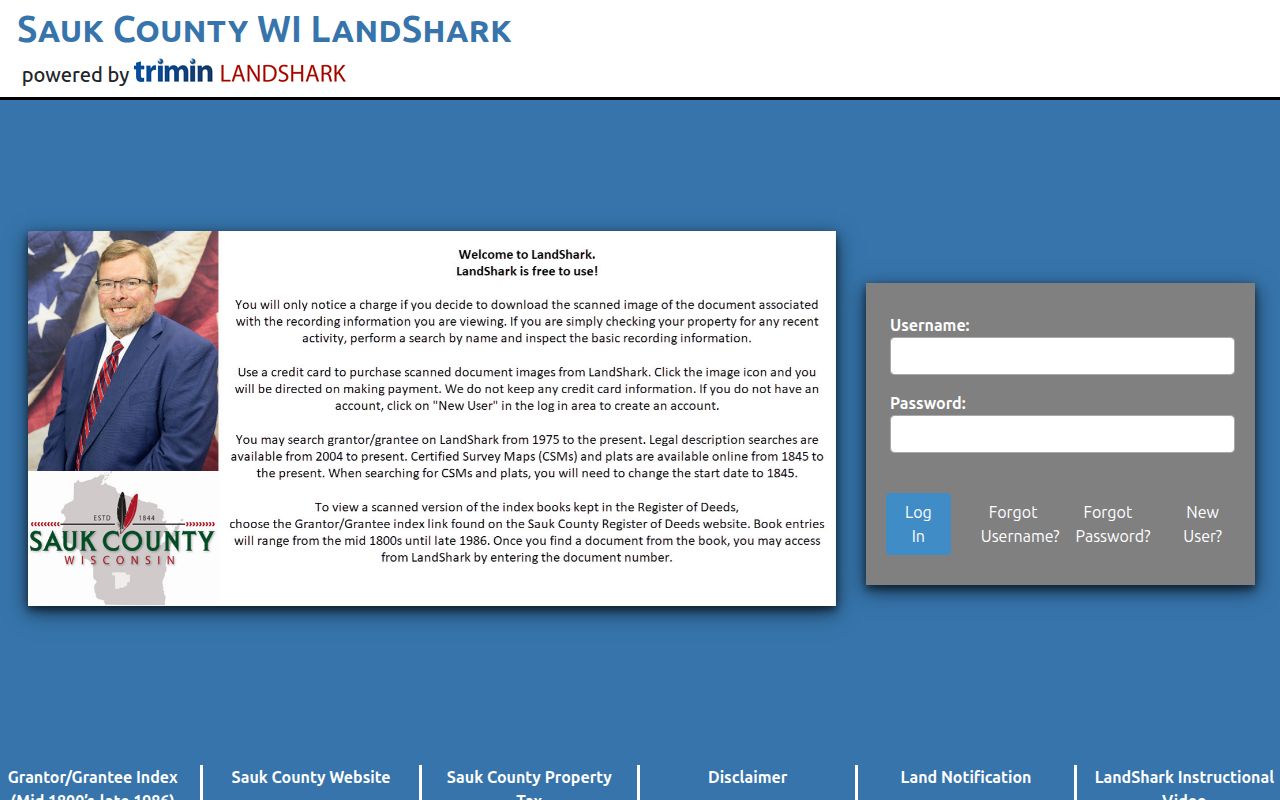
Carry the prior grantor and the legal description into the next deed search. The street address may not follow.
Sauk County Probate Transfers
An owner's death can bend the chain. Land may pass by a personal representative's deed, a transfer-on-death instrument, a survivorship record, or an heirship filing. Search WCCA and Register in Probate. Then compare the parcel and legal description in the inventory, order, or final transfer. A death certificate proves the death. It does not show who received the real estate. Birth and death certificates carry eligibility rules under Wisconsin Statutes chapter 69. A deed is public, but a vital certificate is not open to every requester.
Sauk County Deed Books and Archives
When the online index ends, the paper trail keeps going. The Sauk County Register of Deeds can still pull the original deed books. Microfilm and copies for older transfers are available too. In Baraboo, the Sauk County Historical Society History Center holds archives and a research room. Its collections pair well with the Wisconsin Historical Society catalog for plat maps, newspapers, and local-history context around an old parcel. Old tax-roll years and city directory runs vary. Confirm holdings with the library or archive first. The History Center's research information is a solid local starting point for historic property records.

Maps and newspapers help you pin down the right name or lot. Then confirm the ownership change in a Sauk County deed or probate record. The county library directory is another local starting point for reference help.
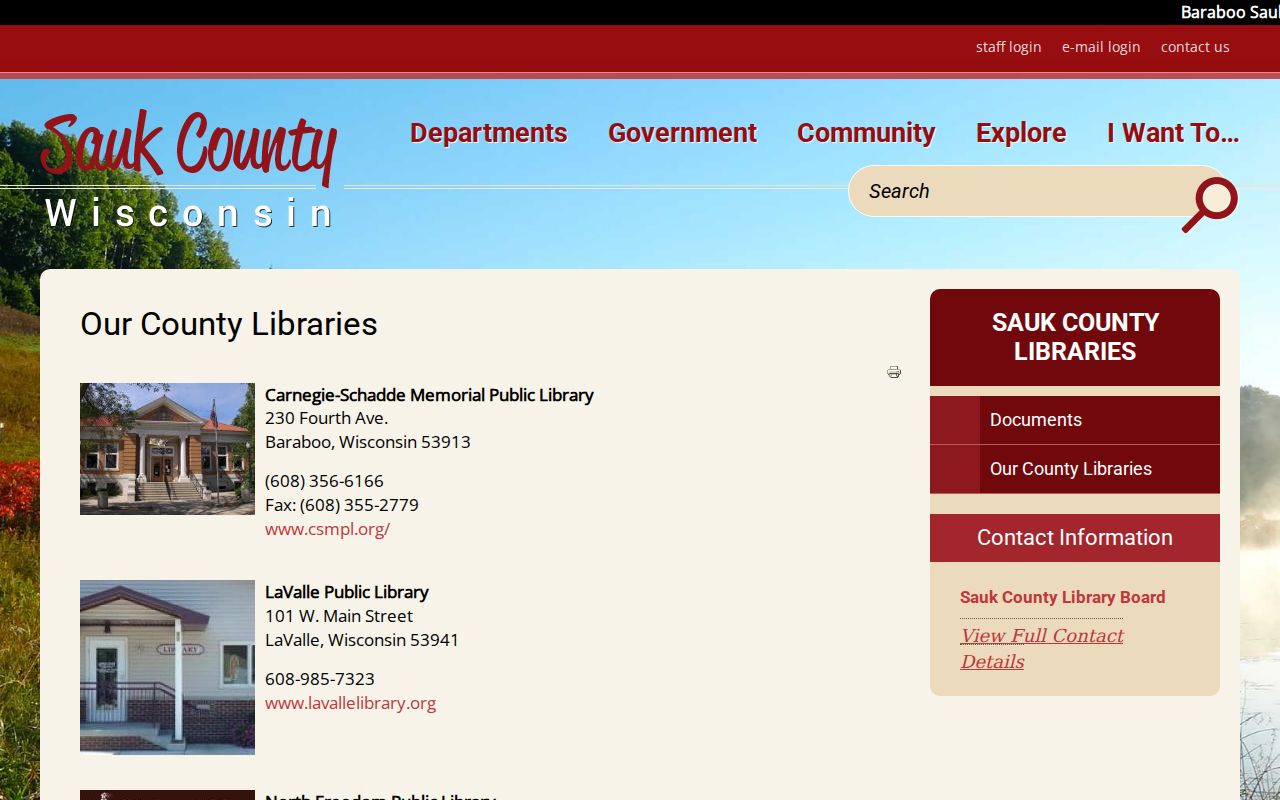
Library branches can help track down a catalog or a local-history lead. Just verify the collection and its dates before you count on a holding.
When a Sauk County Index Has No Hit
A missing online hit rarely means the record is gone. A spelling variant can hide a transfer. So can a deed recorded under an entity, a rural legal description, an older municipality name, or a document outside the image coverage. Try initials and name variants. Search by legal description. Check the prior instrument reference too. Sauk County reports no courthouse fire or county-wide deed loss. So an absent hit points to another source rather than a lost record.
Re-recordings, corrections, releases, and probate instruments can shift the chain of title as well. The Sauk County deed-copy and index route covers a single instrument. The former-owner search works backward through prior transfers from there.
Test alternate names and capacities too. An owner of record may appear under an individual name, a trust, an LLC suffix, or an estate representative. Those are not always the same legal party. A missing deed might sit in the historical system rather than the modern one. It might also sit under the prior owner. Write down the date, party, and description for every search. That way an apparent gap in the property records is documented rather than guessed.
How Far Back Sauk County Owners Trace
The historical grantor-grantee index runs from the mid-1800s through late 1986. That span covers the online index only. It is not a promise that every image or earlier deed is digitized. Sauk County's organized records begin in 1840. A single parcel's chain may still call for work in original deed books. It may also require microfilm, plats, or archive catalogs. No county-wide deed loss appears in the official property records.
Lawful use. Use former-owner records for house history and property research, and verify a title question with a qualified professional. Do not use an old address or name to track, stalk, harass, or harm a living person.